


Visit the Museum
All days 10-16
E-cards
E-card greeting from
The Workers' Museum
Café and Pub ‘1892’

Exhibitions  Industrial work
Industrial work
| Industrial work |
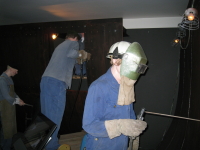 -an exhibition on the evolution of industrial production from the time of industrialization in the mid-19th century until today. New machines, new processes, mass products and unemployment have constantly forced workers to adapt.   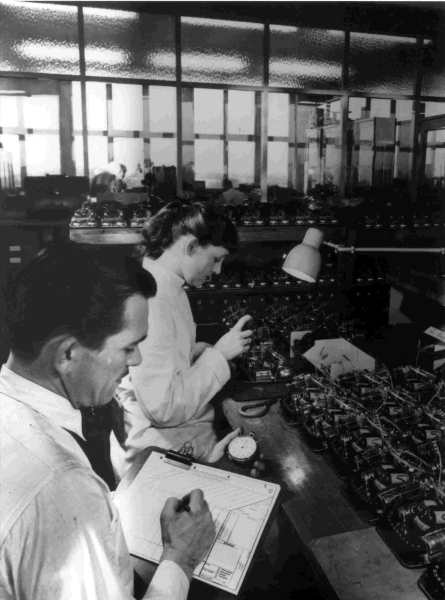 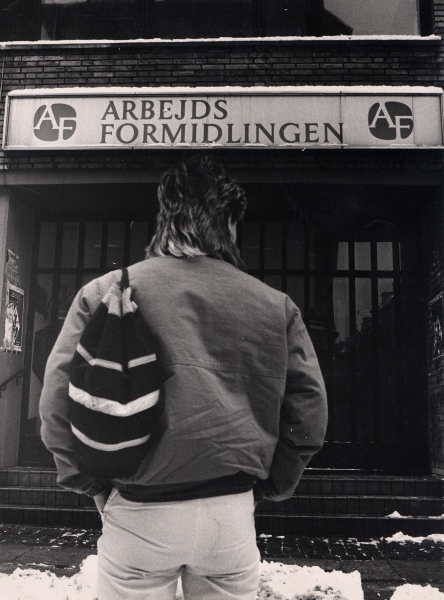 The exhibition shown on the 3rd floor of the museum takes our visitors through 150 years of industrial history. The focal point is no longer domesticity and daily life on the street, but the workplace. The focal point is industrial production – the evolution of work. The exhibition brings to life manufacturing processes, factory rooms, and people by exhibiting a number of work situations in large and small Danish enterprises. Among other things we can watch the Carlsberg back-yard bottlers of the 19th century, the rivet teams of the B&W shipyard of the 1950s, the assembly workers at Bang & Olufsen, present-day machine sewers in Nicaragua and a glove maker who produces gloves in the actual exhibition in the way it was done 40 years ago. Machines, manufacturing processes and management styles have been under constant change from the start of industrialization in the mid-19th century and changes are still taking place all the time. Developments have changed companies, industries, trades and professions. One of the central points of the exhibition is that more than any other social group – including the highly educated and the creative groups – industrial workers have constantly had to adjust and adapt if they were to have a job and an income. The exhibition focuses on the engine fitters who today are robot operators, and on the sewer of the 1970 in the provincial town Ikast, whose children are now designing logos for the jerseys that are being sewn on the same machines today – but now in Nicaragua. 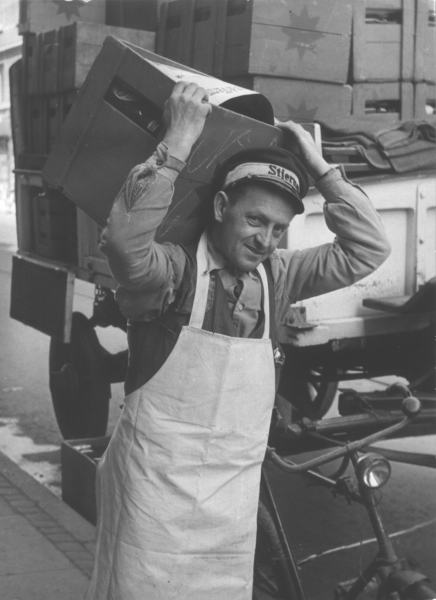 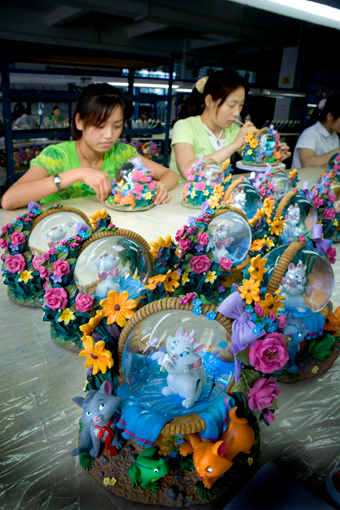 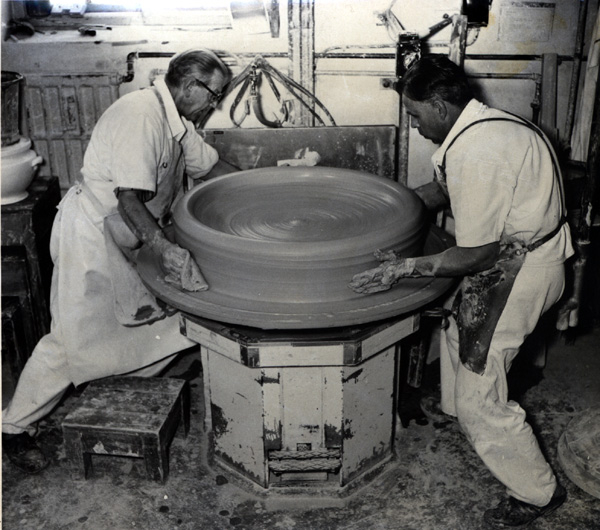 Industrialization does not only mean factories, machines and technological advances. It entails a cultural revolution that fundamentally changes ordinary people’s daily lives, gender roles and family patterns as well as relationships between rural and urban areas and establishes a new social order. Developments in the industrialized society have radically impacted on workers, but similarly workers have influenced this very development. But what is a worker, and was the working class a homogenous mass of peoples sharing the same problems and with identical aspirations? The exhibition attempts to shed light on all these issues; it also tells us about the trade union movement, physical working environments, working conditions, and technological change. - So, on the one hand, the history of industrial work is the tale of changeable, hard, and at times dangerous and backbreaking, but at the same time vitally necessary work. - On the other it is the tale of workers’ long and successful struggle to improve their conditions. The most important thing is the reduction of the working, the increase of wages, and the improvements to the physical environment. The rules applying in today’s labour market is a result of strong trade unions, of solidarity, and strikes and of the many compromises in the labour market that have been reached along the way. The transition of the industrial society into a welfare society is to a high degree the result of workers’ struggle on factory floors, in assembly halls, and in trade union offices.


|
Museum Shop
Coffee Bar

Copyright © 2008 Arbejdermuseet
& Arbejderbevægelsens Bibliotek og Arkiv
Rømersgade 22 | DK-1362 København K.
Telefon: +45-33 93 25 75
email
& Arbejderbevægelsens Bibliotek og Arkiv
Rømersgade 22 | DK-1362 København K.
Telefon: +45-33 93 25 75
Dette site hostes af:

