The Shopping Street
Coffee Bar and Shopping Street
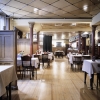
In the Museum’s cosy coffee bar you can sit down at one of the tables covered in red- chequered oilcloth and enjoy a cup of coffee or a soft drink and a piece of chocolate biscuit cake in the style of the 1950s. From here you walk out into the shopping street where the A. C. Hansen’s Hosiery Shop displays that your heart could desire in contemporary clothing. The range includes such typical items as nylon shirts and blue jeans.
Meyer’s Dairy Shop right next door is quite something. All over the country there were dairy shops selling fresh milk, butter out of the cask; cheese; eggs; and a bar of ice for the icebox – a forerunner of the refrigerator. In Copenhagen the bar of ice was brought to the dairy shop by horse and carriage from the Crystal Ice Works.
In the radio shop you find the most modern television sets; reel-to-reel tape recorders and gramophones. Only in the late 1950s would working-class families be able to afford these types of goods. Until then they had to make do with renting a radio on a monthly basis or a vacuum cleaner for a single day. In the shop people could buy, sell and exchange goods. A sign next to the shop tells us that on the first floor there is a shop selling on the instalment plan. To get up there one has to squeeze past the delivery boy enjoying a short break with his goods on the steps.
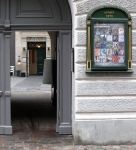
Across from the shop, you see a row of showcases luring customers to take a stroll past Holmberg’s Toy Shop, Poulsen’s Photographic Studio or take in a film at the Atlantic Cinema.
At the end of the street there is a small square where a married couple of old-age pensioners are having a rest sitting on their regular bench. The wife sits with a straight back, she is quite ready to go home and peel the potatoes and get dinner on the table. Her husband’s sits in a hunched position; he is a little tired after all those years on the factory floor.
The Flat
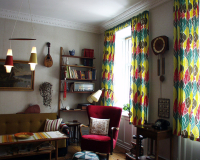
A flat of the ‘50sIn the first half of the 1950s, times were still generally hard in Denmark. Construction of new housing was quite restricted, and it was difficult for young people to find somewhere to live away from their parents. In this exhibition the five members of the Hansen-family live in a two-room flat. The family consists of Mr Hansen, a bricklayer’s assistant, and Mrs Hansen, a skilled hairdresser working from home in the family living room. They have three kids still living at home. The eldest boy is a motor mechanic apprentice; their daughter works as a shop assistant and the two of them share a room with the baby – the youngest member of the family. The parents sleep on a sofa bed in the living room.
Despite the cramped living conditions, the flat also reflects the fact that in the course of the 1950s people had a little more money to spend. We see some newly teak furniture in the living room, lamps in trendy colours, the height of fashion in 1955. Because of this many people felt that it was finally possible for them to turn their backs on the Depression of the 1930s and the war of the 1940s and post-war austerity.
Work
Two work placesHaving passed the square, we arrive at two different 1950s work places: A garage and a building site.
The 1950s were a time of rapid change in construction work. Gradually more machines and new products were introduced such as hoists, hydraulics, wallboards and building units. This meant that work in the construction sector became less physically demanding and less dangerous. In smaller building sites scaffolding was still made of timber, bricks were literally carried on men’s backs, and mortar was mixed by hand. These were the jobs for the bricklayers’ assistants and each gang of bricklayers had their own assistants.
Recreation
More free time for working-class familiesGradually working-class families had more time to spend on recreational activities. The Holiday (with Pay) Act of 1938 for the first time in history guaranteed that all Danish workers were entitled to two weeks paid holiday every year, and in 1957 weekly working hours were reduced from 48 to 44.
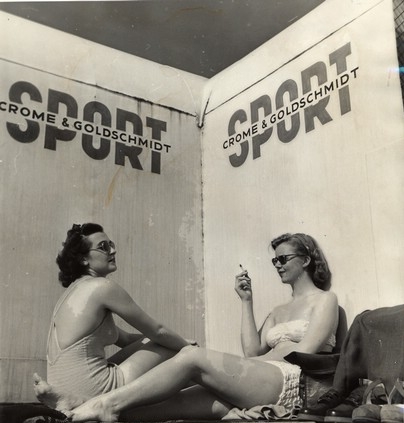
Not only did this leave time for more recreational activities like sports and outings to the beach, but also for proper holidays. People went away under their own steam to camp sites or, for those who could afford it, they took holidays organized by the Workers’ Travel Association in one of the many holiday villages that were constructed all over the country.



 The 1950s